Thursday, April 25, 2013

How To Handle An Engine Fire


While driving can be an extremely fun activity, there are always dangers that drivers need to be aware of. One of those dangers are car fires. The National Fire Protection Association (NFPA) reports that there is a vehicle fire every 96 seconds in the United States.

The dangers of car fires are further highlighted by articles like one on Detroitnews.com that tells one man’s tale about how his truck went up in flames within three minutes. “A fire in a modern vehicle burns fast and furiously,” the writer states. “What's intact for the moment can be gone or enveloped in toxic smoke in a matter of seconds.”

All drivers need to be aware of this potential danger, especially since most fires start due to electrical problems, which can’t be seen and can be undetected. Signs of potential problems, according to Statefarm.com, are:

·      Fuses that blow repeatedly
·      Spilled oil under the hood left over from an oil change
·      Oil or other fluid leaks under the vehicle
·      Cracked or loose wiring, or wiring with exposed metal
·      Very loud sounds from the exhaust system
·      Rapid changes in fuel level, oil levels, or engine temperature
·      A missing cap from the oil filler
·      Broken or loose hoses

Should the warning signs lead to a real emergency before any problems can be fixed, remember to stay calm and do the following:

·      As highlighted in the Detroitnews.com article, if anything seems “off” in your car, pull over and get out – you’ll be able to see if anything is obviously wrong.
·      If you smell gasoline, don’t just assume it’s coming from another car – it could be a sign of trouble in yours. Pull over.
·      When you pull over, turn off your car’s ignition immediately. Exit the vehicle and do not go back for personal items.
·      If you see flames once you exit the vehicle, call 911 immediately and keep away from your car.
·      Do not open the hood of your car and attempt to fight any fire yourself; opening the hood adds extra oxygen to the blaze and makes the situation worse.

As with all accidents, you should also find ways to alert oncoming traffic to the danger your car poses, and take pictures of the damage to show to insurance agents later.
Thursday, April 18, 2013

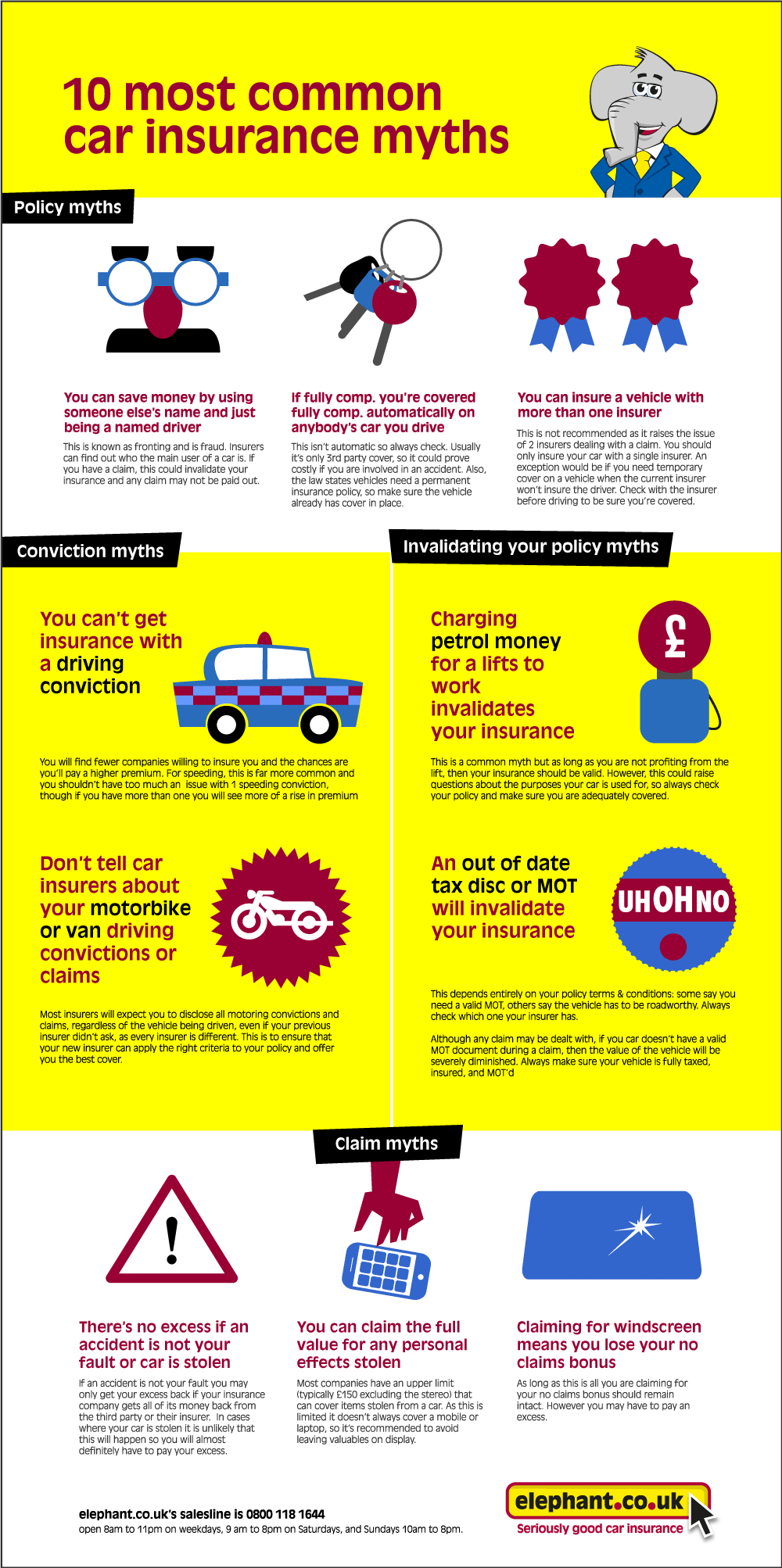
The 10 Most Common Car Insurance Myths: An Infographic


Dealing with car insurance can be a tricky thing at best and a hassle at worse. The matter is made harder by the number of misconceptions and outright myths that exist in our minds.

Having the right facts about car insurance is very important and can make the difference between whether you’re obeying the law or committing fraud. Check out this sweet infographic and quiz yourself - what car insurance myths did you believe on this list?

Click the image to view a larger version!


Thursday, April 11, 2013

Regular vs. Premium Gas


What’s the difference between regular and premium gas? And which one should I use?

The difference between regular and premium gas is the octane level. Regular gas has an octane rating that is usually around 87, midgrade gas is usually around 89, and premium is usually somewhere around 91. The octane level determines how quickly a fuel burns. If a fuel has a higher octane level, it will burn slower because it has a higher compression level and is less likely to combust without the ignition of the spark plug. When fuel combusts before it is ignited by the spark plug, this means that not all the fuel in an engine will burn and it will most likely leave debris and gunk in the engine.

If you’re unsure what your car should take, check the owner’s manual. While a higher-octane fuel is a better quality fuel, not every car needs that. Premium gasoline is made for better quality engines and will only be wasting the money of the person who uses it when they should be using regular. In the same matter, if your car needs premium, putting regular gasoline in it will most likely lead it to “knock” which is the term used for an engines early combustion.

Thursday, April 4, 2013

How To Survive A Car Crash


We’ll be the first to admit it, driving can be dangerous. And yet, at the same time driving can be safe! If you’re taking the correct precautionary measures, like those mentioned in this article, How to Avoid a Car Accident, safely driving a car can be a sinch! Unfortunately, however, somtiems accidents are unavoidable and it is no longer a question of how to avoid an accident, but rather how to safely get through one!

This graph provides some quick tips on how to survive an accident! So keep your head back and your eyes focused and took a look at this!


Friday, March 29, 2013

Crossing State Lines


Sometimes cars can get very expensive. And with gas and repairs, it can feel like the spending never stops. When it comes to insurance, however, how bad do you actually have it? According to an Insure.com study, out of the 50 states, Louisiana has the most expensive car insurance and Maine has the least! To check out the list and see where we fall, click on the link here: http://bit.ly/f4nIDj

Friday, March 22, 2013

10 Coolest Car Facts

 Funny Facts About Cars thumbnail

The history of the automobile is lengthy in America! Cars have been on the road for over 100 years across the country. Wondering what the weirdest things about cars are? Check out these fun car facts from eHow!

The Early Days

  • The first speeding tickets were given out in 1902, when the top speed of most cars was around 45 miles per hour.
  • Some of the first cars ever made used a pair of levers to steer. Steering wheels weren't introduced for several years.
  • Even before the Model T, the first popular American car was the Curved Dash Oldsmobile, which sold new for $650.
  • The first car ever produced in America for sale was known as the Duryea. Only one model is known to still exist.
  • Before the 1920s, cars didn't have gas gauges. Drivers had to estimate how much fuel was left, or risk running out.

For Drivers

  • Cleveland was the first city in the United States to get a traffic light in 1914.
  • In 1972 the average speed of cars on Los Angeles freeways was 60 miles per hour. Ten years later, the growing traffic problem dropped that number to 17 miles per hour.
  • The average American will spend two weeks of her life stopped at red lights.
  • To drive on all of the paved roads in the United States, you would have to drive nonstop at 100 miles per hour for over four years.
  • The first car insurance policy was issued in Westfield, Massachusetts, in 1897.

Read the original article here: http://www.ehow.com/about_5280598_funny-cars.html#ixzz2OHBzl0H0

Friday, March 15, 2013

Car Care: Spring Maintenance Check List

It’s officially the Ides of March, so beware! You and your car may be excited to hit the road again in the nice weather, but over 9 million people break down and have to call AAA each summer. What can you do to help your car recover from the winter, and get ready for the nicer weather?


“If, like most Americans, you're not driving a fresh-from-the-showroom ride - the average age of passenger vehicles in the U.S. is just over 10 years old - it's time to give your car a little springtime TLC.
"Drivers often overlook their cars when it is spring cleaning time," says Shawn Hoelzer, master technician for CarMax, the largest U.S. chain of used car dealerships. "Following a few easy steps to spruce up your vehicle helps avoid costly repairs."
So take your car to a dealership to get checked out. Use this spring maintenance checklist to make sure your car is reliable and running efficiently.
Check the battery: You can't get where you are going if the car won't start. "Winter is tough on all the starting components like the starter and alternator. The battery works harder and can get drained," says Jimmie Swims, a specialist at the auto parts chain Auto Zone. Signs of a weak battery: dimming headlights or interior lights; power windows that take longer than usual to go up and down.”


“Check the brakes: Winter conditions and salt on the roads can lead to corrosion of brake parts; Auto Zone's Swims also points out that anti-lock braking systems get an especially hard workout in winter's slick conditions. Nothing is more crucial to your safety than your brakes, so get them checked. Trouble signs: pulling to one side when you hit the brakes, squeaking or grinding noises and a brake pedal that feels too soft.
Tire photo courtesy of Flickr user Bryan Alexander Battery photo courtesy of Flickr user Robert Hruzek”

Full article here: http://www.cbsnews.com/8301-505145_162-40542866/car-care-spring-maintenance-check-list/

Twitter Delicious Facebook Digg Stumbleupon Favorites More